
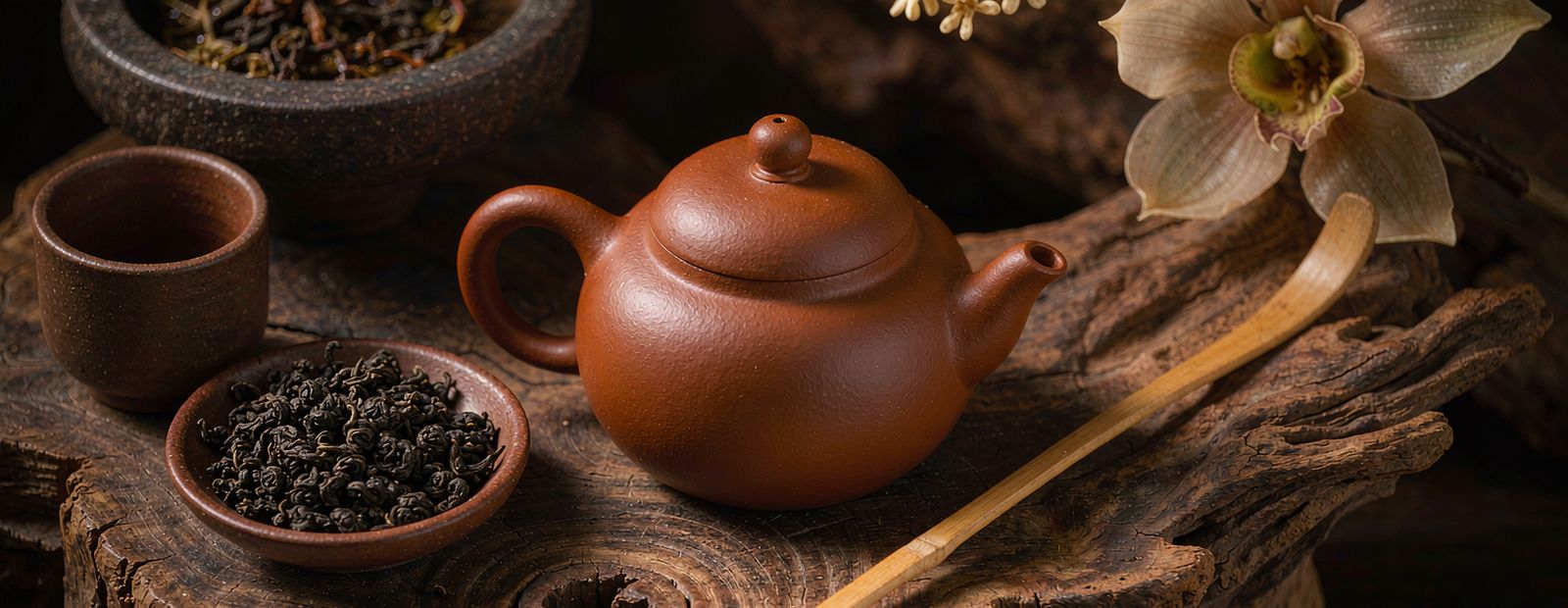
How to Brew Oolong Tea
Brew oolong at 85-95 C: 2-3 g per 8 oz for 3-5 minutes, or short gongfu infusions at 1 g per 15 ml. Steep-by-steep table and the mistakes that ruin good leaf.
The short version
- Match water temperature to oxidation: 85–90 °C for light oolongs, 90–95 °C for medium, up to 95 °C for dark roasted.
- Western method: about 1 tsp (2–3 g) per 8 oz, 3–5 minutes, 2–3 steeps.
- Gongfu method: about 1 g per 15 ml (5–8 g per 100 ml gaiwan), 20–45 second steeps, 6–12 infusions.
- Rolled pellets need room to expand — use at least a third of the vessel dry, and rinse them first.
- Boiling water on a delicate green oolong is the most common way to ruin good leaf.
Oolong is the tea category most often brewed badly, and almost always for the same reason: someone read one set of instructions and applied it to every oolong they own. The category is wide enough that no single recipe covers it. A high-mountain Taiwanese oolong and a charcoal-roasted Wuyi rock tea are the same species processed in opposite directions, and they want opposite treatment. Sort your tea into light, medium and dark first, and the rest of this page becomes simple.
Step one: work out how oxidised your tea is
| Style | Examples | Water temp | Western steep | Gongfu first steep | Infusions |
|---|---|---|---|---|---|
| Light (10–30%) | Alishan, Dong Ding (green style), Baozhong | 85–90 °C | 2–3 min | 30–45 s | 6–10 |
| Medium (30–50%) | Traditional Dong Ding, light Tieguanyin | 90–95 °C | 3–4 min | 25–35 s | 7–12 |
| Dark roasted (50–80%) | Da Hong Pao, Rou Gui, heavy Tieguanyin | 95 °C to boiling | 4–5 min | 20–30 s | 8–12 |
| Dancong (aromatic) | Mi Lan Xiang, Ya Shi Xiang | 90–95 °C | 2–3 min | 15–25 s | 6–9 |
If you cannot tell which row you are in, look at the dry leaf. Tight green pellets or jade-coloured twisted leaf means light. Brown to near-black strips that smell of toasted grain means dark roasted. Anything in between is medium, and 90 °C is a safe landing spot for it.
Western brewing: one mug or one pot
This is what most people mean by making tea, and it works well with oolong as long as you respect the ratio.
- Measure the leaf. One level teaspoon of rolled oolong weighs roughly 2–3 g, and that is right for an 8 oz mug. For a 1-litre pot use 10–12 g. Rolled pellets look like almost nothing in the spoon and then triple in volume when wet, which is normal — do not add more because it looks sparse.
- Heat the water and let it settle. Bring it to a boil and then take it off the heat for one to two minutes if you are brewing a light oolong. Off the boil, water at sea level lands in the 85–90 °C band after roughly two minutes of standing. Use a thermometer once and you will never need to again.
- Rinse, optionally. Pour a little hot water over the leaf, swirl, count to five, discard. This is standard for rolled oolongs because it helps the pellet open. Skip it for open-leaf teas.
- Steep 3 to 5 minutes depending on the row in the table above. Lid on, because most of the aroma is in the steam.
- Decant fully. Do not leave leaf sitting in the remaining water. Pour it all off into a second vessel or a mug, and keep the spent leaf for a second and third steep.
Western brewing gets you two good infusions and a drinkable third. Extend the second steep by about a minute and the third by two, because the leaf has given up its fastest-extracting compounds already.
Gongfu brewing: where oolong actually shines
Oolong was designed for this. The rolled pellet, the layered aroma, the way flavour moves between infusions — all of it only shows up when you brew many short steeps at a high ratio. You need very little equipment: a 100 ml gaiwan, a small pitcher, and a cup.
| Infusion | Steep time | Water temp | What to expect |
|---|---|---|---|
| Rinse | 5 s, discard | Same as brewing | Opens the leaf, rinses dust |
| 1 | 20–30 s | 85–95 °C by style | Aroma first, body still light |
| 2–3 | 20–30 s | Same | Flavour opens up; often the peak |
| 4–5 | 30–45 s | Same | Body thickens, sweetness rises |
| 6–8 | 45–75 s | Same or hotter | Lighter, sweeter, still pleasant |
| 9+ | 2 min + | Hotter | Faint sweetness; stop when it thins |
The rule for adjusting is to read the previous cup. Too strong, shorten the next steep rather than adding water to what you have. Too weak, add ten seconds and use slightly hotter water. Do not change both at once or you will not know which one mattered.
Water matters more than people think
Tea is 99% water, and hard water flattens oolong visibly. Very high mineral content binds with the compounds responsible for aroma and leaves a dull, slightly scummy cup. Very soft water can produce a thin, hollow result. A medium-mineral filtered water is the practical middle. If your tap water leaves scale in the kettle, filter it; if your filtered water tastes of nothing at all, a pinch of mineral content will help more than any change to your technique.
Reboiling is worth avoiding for light oolongs. Water that has boiled repeatedly holds less dissolved oxygen, and the cup comes out flatter. Use fresh water from the tap each time.
Cold brew and iced oolong
Cold brewing works well with oolong and is the most forgiving method in this entire page, because cold water simply cannot extract the bitter compounds quickly. Use about 10 g of leaf per litre of cold water, put it in the fridge, and leave it 8 to 12 hours. Strain and drink within two days.
The result is different rather than worse: less aroma, more sweetness, lower caffeine. Lightly oxidised oolongs do best cold; heavy roast produces something that tastes thin and a little like cold tobacco. For iced tea made hot, brew at double strength and pour over ice rather than brewing normally and chilling, which dilutes and clouds.
Mistakes that ruin good leaf
- Boiling water on a green oolong. The single most common error. It scalds the leaf, kills the florals and brings out astringency.
- Not enough leaf. One tiny pellet in a litre of water is not tea. Gongfu ratio is 1 g per 15 ml; if you are brewing Western style and it tastes like coloured water, double the leaf before you blame the tea.
- Steeping one long infusion instead of several short ones. You get everything at once, including the tannins, and you throw away leaf that had six more cups in it.
- Leaving the leaf in the pot. Brewing stops when you decant. Leaf sitting in water keeps extracting and the last third of the pot turns bitter.
- Judging a tea on its first infusion. Rolled oolongs are still opening at infusion one. The third through fifth are where they show what they are.
Equipment: what you actually need
Very little. A 100 ml gaiwan costs less than a takeaway lunch and is the best single purchase for this category: the lid lets you smell the wet leaf, and the small volume forces the high leaf ratio oolong wants. A small porcelain pot works too, though it holds heat longer and shortens steeps slightly. A scale accurate to 0.1 g is worth having, because "a teaspoon" varies by roughly a factor of two between a tightly rolled pellet and an open twisted leaf.
What you do not need: a variable-temperature kettle is convenient, but a cheap thermometer does the same job; a tea tray catches spillage without improving the tea; and clay pots are a deep rabbit hole with real benefits and a great deal of mythology attached, and not where a beginner should put money.
Diagnosing a bad cup
| Symptom | Usual cause | Fix |
|---|---|---|
| Bitter, drying finish | Water too hot or steep too long | Drop 5 °C, cut 15 seconds |
| Weak, watery, no aroma | Too little leaf | Double the leaf before changing anything else |
| Flat despite correct parameters | Water boiled repeatedly, or hard water | Fresh filtered water |
| Good at steep 1, nothing after | Broken or bagged leaf | Buy whole leaf |
| Harsh smoky edge | Very recently roasted Wuyi tea | Rest it six months |
| Sour or musty | Leaf absorbed moisture in storage | Discard it |
Change one variable at a time. Adjusting temperature and time together is the most common reason people never work out what went wrong.
Scaling up for a group
Brewing for four people does not mean four times the leaf in one vessel, which is the mistake that produces a bitter pot. It means either brewing gongfu and pouring into a shared pitcher — one 100 ml gaiwan served as small cups works fine for four people over several rounds — or scaling Western proportions linearly and holding the timing constant. For a 1 litre teapot use 10–12 g and keep the steep at 3–4 minutes. Decant fully into a second warmed pot rather than serving from the leaf.
Small cups are the point. Oolong is designed to be drunk in 30–50 ml pours, and four people sharing one gaiwan will each drink eight or nine cups over an hour, which is a better experience than four large mugs brewed once.
How brewing changes the caffeine
Temperature and time are the two variables that also drive caffeine, so every adjustment here has a second effect. Hotter and longer means more caffeine; cooler and shorter means less. One extraction study measured about 25 mg at one minute in boiling water rising to about 47 mg at six minutes, so cutting a five-minute steep to two removes a substantial share. If you are brewing for the evening, lower the temperature rather than shortening the steep — the cup keeps more flavour that way. The numbers in full are on the oolong tea caffeine page.
If you have not bought anything yet and want to know which styles are worth this much attention, start with oolong tea varieties or best oolong tea.
Questions people actually ask
What temperature water should I use for oolong tea?
Match it to the oxidation level: 85 to 90 C for light oolongs such as Alishan or Baozhong, 90 to 95 C for medium ones such as traditional Dong Ding, and 95 C or just off the boil for dark roasted Wuyi teas. Boiling water on a delicate light oolong will scorch it.
How long should I steep oolong tea?
Three to five minutes brewing Western style in a mug or pot, or 20 to 45 seconds brewing gongfu style in a gaiwan. Gongfu brewing continues for six to twelve infusions, extending each steep by ten to fifteen seconds as the leaf weakens.
How much oolong tea per cup?
About 2 to 3 g (one level teaspoon) per 8 oz mug for Western brewing, or about 1 g per 15 ml of water for gongfu - roughly 5 to 8 g in a 100 ml gaiwan. Rolled pellets look sparse in the spoon and expand several times over when wet.
Can you steep oolong tea more than once?
Yes, and you should. Western brewing gives two to three good infusions; gongfu brewing gives six to twelve from the same portion. Flavour typically peaks between the third and fifth infusion rather than the first.
Should I rinse oolong tea before brewing?
For rolled pellet oolongs, yes - a five second rinse with hot water helps the pellet open and rinses off leaf dust. For open-leaf oolongs it is optional. The rinse also discards some of the caffeine, along with some aroma.
Can I cold brew oolong tea?
Yes. Use about 10 g of leaf per litre of cold water and refrigerate for 8 to 12 hours. Cold brew is sweeter, less aromatic and lower in caffeine than hot brewing, and suits lightly oxidised oolongs better than heavy roast.
Where these figures come from
- Journal of Agricultural and Food Chemistry — peer-reviewed work on tea chemistry, including caffeine extraction over steep time and the aroma compounds behind oolong flavour
- USDA FoodData Central — per-serving caffeine values for brewed tea