
How to Buy Loose Leaf Oolong Tea
Buy whole leaf oolong with a stated cultivar, region and harvest date. Why leaf grade decides re-steeping, what drives price, and the red flags in marketplace listings.
The short version
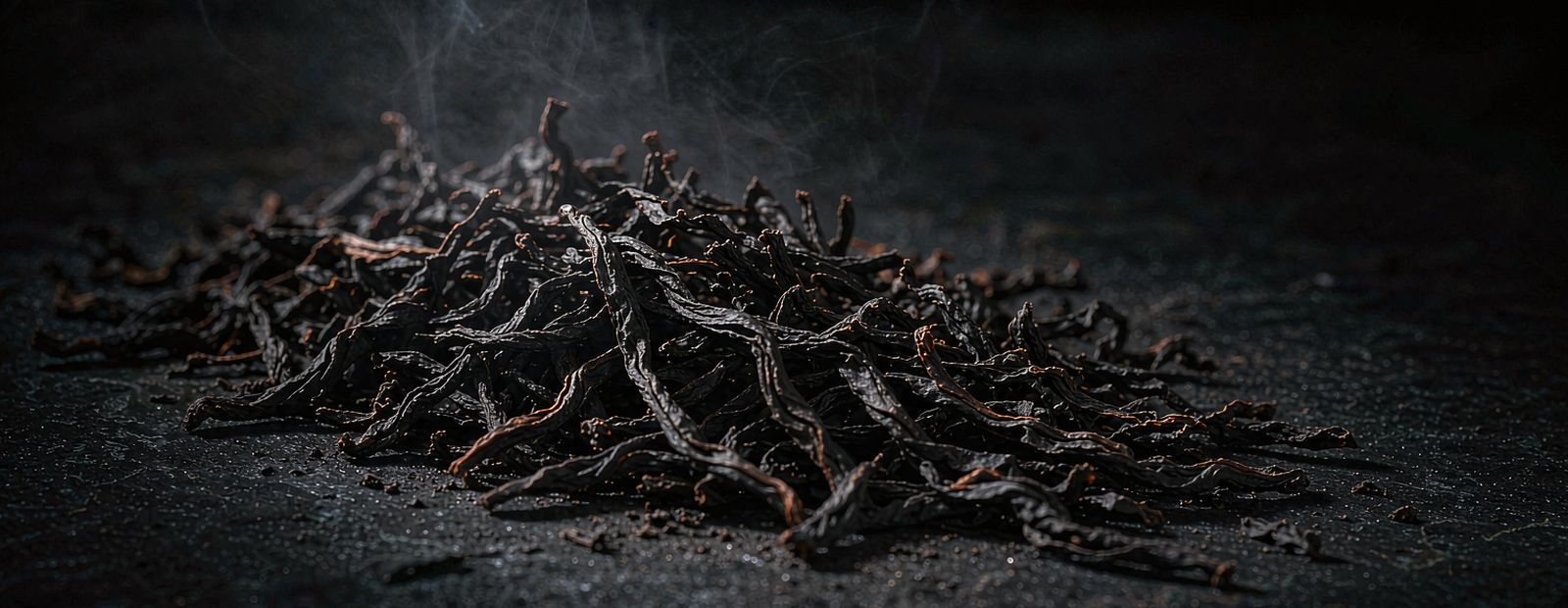
- Buy whole leaf. Broken leaf and dust give up everything in one steep and then turn bitter.
- Oolong is priced by cultivar, elevation and harvest, not by brand.
- Ask for the harvest season and the garden; a vague answer is an answer.
- Gongfu ratio is 1 g per 15 ml, so 100 g is roughly 15–20 sessions — the price per cup is lower than it looks.
- Expect to pay more for named-origin Taiwanese high-mountain and Wuyi rock teas, and treat bargain Da Hong Pao as a red flag.
Oolong is the easiest tea to overspend on and the easiest to be cheated on. Both problems come from the same place: the category has no single name buyers can check, so value is carried by details most listings never mention. Learning four of those details is most of what you need.
Whole leaf versus broken versus bagged
| Grade | Appearance | Steeps it survives | Best use |
|---|---|---|---|
| Whole leaf, rolled | Tight pellets, intact when unfurled | 6–12 | Gongfu or Western, the standard |
| Whole leaf, strip | Long twisted or straight leaf | 6–12 | Gongfu, all Wuyi and Dancong |
| Broken leaf | Fragments, some dust | 2–3 | Acceptable for a single strong mug |
| CTC / fanning / dust | Granules or powder | 1 | Tea bags; not worth buying as oolong |
The reason this matters more for oolong than for other teas is re-steeping. Oolong's aroma is layered across infusions, and broken leaf releases everything at once. A bag of "oolong" from a supermarket will taste fine once and then bitter; the same money in whole leaf would have given you a dozen cups.
What actually drives the price
- Elevation, for Taiwanese teas. High-mountain lots picked above about 1,000 m cost several times low-elevation ones, and above 2,000 m the premium is steep. Whether the difference is taste or scarcity is a fair argument, but the market is not ambiguous.
- Harvest season. Spring and winter picks are prized; summer picks are cheaper and generally more astringent. Winter harvests (冬片) command a premium in Taiwan.
- Cultivar and tree age. Named Dancong single-bush lots and old-tree material sit at the top of the market.
- Roast labour. Charcoal roasting over multiple sessions, as Wuyi teas get, costs real time and skill.
- Named origin. Alishan, Dong Ding and Wuyi rock teas carry origin value in practice; Tieguanyin does not, because the name describes a cultivar grown widely outside Anxi.
Brand sits well down that list. Two vendors selling "Tieguanyin" at a fourfold price difference may simply be selling different tea, and the expensive one is not automatically the better one.
Four questions to ask before you buy
- Where was it grown? County level at minimum. "Fujian" is not an answer for something priced as Alishan.
- When was it harvested? A vendor selling fresh tea will print the date. Tea with no date is usually old tea.
- What is the roast level? Especially for Tieguanyin and Dong Ding, where green and roasted styles taste like different teas.
- Will they state the cultivar? For Dancong and Taiwanese teas this is standard practice. Evasion usually means a blend.
Vague answers to all four are themselves informative. Tea worth a premium gets described precisely, because the producer wants you to know what they did.
Red flags in listings
- Bargain Da Hong Pao. The name is the most counterfeited in Chinese tea. Real Wuyi rock tea from a named area is not cheap; a low price means a blend at best.
- "Milk oolong" with a strong dessert aroma. Authentic Jin Xuan is subtle. Loud cream usually means flavouring — see milk oolong tea.
- Photos showing dust or uniformly tiny fragments. You are buying broken grade regardless of what the title says.
- Health claims in the listing. A vendor promising fat burning or disease prevention is breaching advertising rules and probably cutting corners elsewhere.
- No harvest date anywhere. Oolong is not pu-erh; freshness matters, particularly for light teas.
What a fair price looks like
Rather than quoting numbers that move every season, use the cost-per-session test. At gongfu ratio of about 1 g per 15 ml, a 100 ml gaiwan uses 6–7 g per session, so a 100 g pouch is roughly 15 sessions. Divide the pouch price by 15 and compare that against what a coffee costs you. Most mid-tier oolong lands comfortably below a cafe coffee per session; top-tier high-mountain and Wuyi teas land well above it, and whether they are worth it is a taste question nobody else can answer for you.
Specialist vendor versus marketplace
| Channel | Good for | Risk |
|---|---|---|
| Specialist tea vendor | Stated origin, cultivar and harvest; fresh stock | Higher prices; still varies by vendor |
| Taiwanese or Chinese vendor shipping direct | Best price on high-mountain and rock tea | Language, shipping time, customs |
| Large marketplace | Cheap everyday tea, fast delivery | Mislabelling is common; harvest dates usually absent |
| Supermarket | Nothing in this category | Dust grade in bags; no re-steeping |
| Tea subscription or sample service | Tasting across the range cheaply | Often biased toward whatever they overstocked |
The marketplace risk deserves specifics, because it is the channel most people use. Oolong listings there routinely omit the origin, the harvest and the cultivar, and three different sellers will offer "Da Hong Pao" at prices an order of magnitude apart. Since none of them is describing what is actually in the packet, price carries no information. A specialist vendor charging twice as much is the cheaper option if the marketplace tea turns out to be undrinkable.
Reading a harvest date
Good vendors print a picking date or a season and year. Spring (roughly March to May) and winter (roughly November) are the prized harvests for Taiwanese tea; summer picks are cheaper and generally more astringent. For roasted Wuyi tea the relevant date is the roast, not the harvest, and a recent roast means the tea needs rest before drinking.
Absence of any date is the signal. Tea that had a good harvest gets the harvest printed on it. Tea with no date is usually either old or blended from several lots, and both are reasons to keep looking.
How much to buy at once
Less than you think. Light, unroasted oolongs lose aromatics within six to twelve months, so a 50 g pouch you finish is better value than 250 g that goes flat. Roasted Wuyi teas are the exception — they keep two years or more and often improve, so buying more of those is reasonable. Storage detail is on oolong tea storage.
If you are buying your first lot, a sample set covering the light, creamy, medium and roasted ends teaches more in one afternoon than any amount of reading. See oolong tea varieties for what to put in it, or best oolong tea for specific picks.
How these picks were arrived at
Two rules decided this list. First, buy by cultivar and harvest rather than by a brand name - the word on the tin tells you less than the region and the date the leaf was picked, and those two details account for most of the price difference between a cheap tin and a good one. Second, buy whole leaf over pellets when the tea will be re-steeped, because the intact leaf holds its structure across infusions and a broken pellet gives up its flavour in the first cup. The caffeine figures quoted throughout this site come from USDA FoodData Central, measured on brewed tea rather than dry leaf, which is why they run lower than the numbers most websites repeat. The word "oolong" itself entered English usage in the 1840s, well before the Taiwanese and Fujian styles that dominate the market today were exported at all, which is worth remembering when a listing uses the word to imply tradition it does not have.
Questions people actually ask
Where should I buy loose leaf oolong tea?
From a specialist tea vendor who states cultivar, region and harvest date, rather than a general marketplace. Marketplaces are full of mislabelled oolong because the category has no single verifiable name, and price alone tells you nothing.
Is loose leaf oolong better than tea bags?
Yes, for this category specifically. Oolong is built to be re-steeped, and the broken leaf or dust inside tea bags gives up everything in one infusion and then turns bitter. Whole leaf gives six to twelve.
How much oolong tea should I buy at a time?
50 to 100 g for light, unroasted oolongs, which lose aroma within six to twelve months. Roasted Wuyi teas keep two or more years and improve, so larger purchases of those are fine.
Why is some oolong so much more expensive?
Elevation, harvest season, cultivar, tree age and roasting labour. Taiwanese high-mountain lots picked above about 1,000 m, and named Wuyi rock teas, carry large premiums; Tieguanyin prices vary mainly because the name is used for widely different tea.
How do I know if oolong tea is good quality?
Whole intact leaf, a stated origin and harvest date, and a sweet aftertaste after swallowing (hui gan). Bitterness in the first properly brewed cup, or a listing with no harvest date, are both bad signs.
How should I store oolong tea once I have it?
Airtight, away from light, heat and strong smells. An airtight tin or the original foil pouch with the air squeezed out both work. Skip the fridge for tea you open daily, because condensation does more damage than warmth.
Where these figures come from
- USDA FoodData Central — per-serving caffeine values for brewed tea
- Merriam-Webster: oolong — earliest recorded English use, 1845