
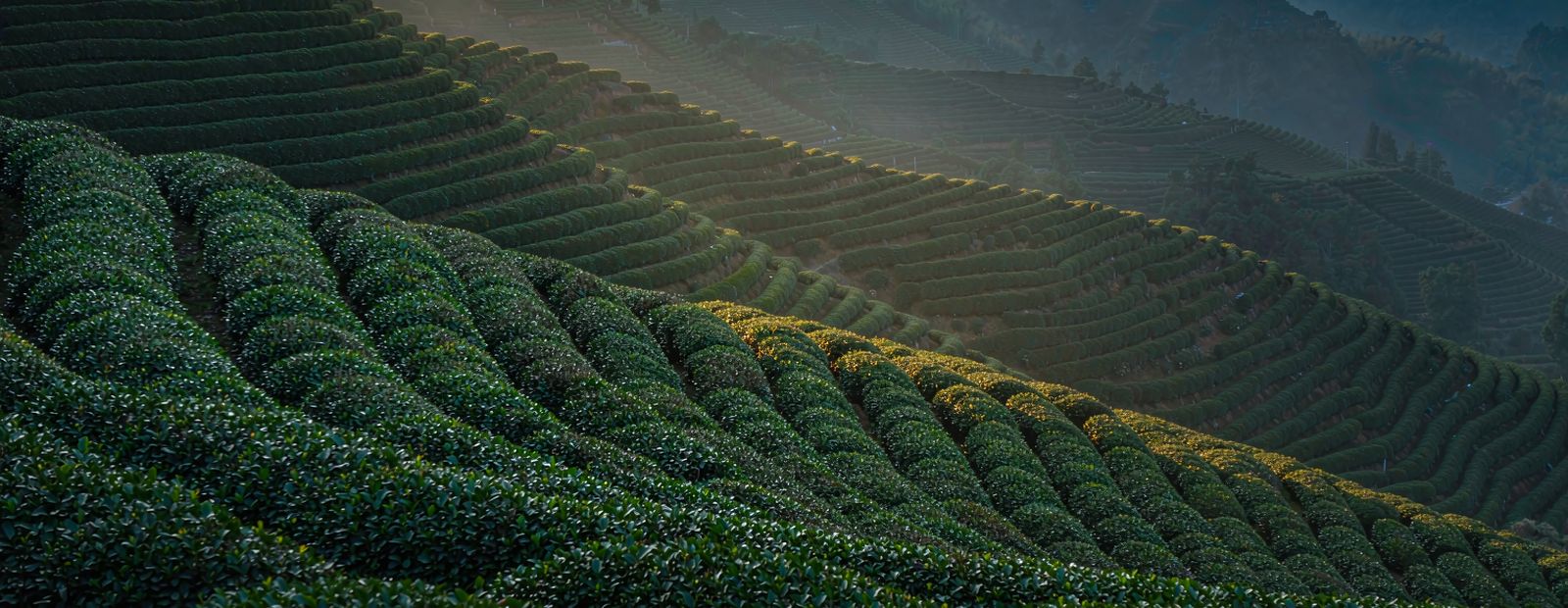
Oolong Tea Varieties: The Four Families and How to Choose
Oolong splits into Anxi Tieguanyin, Wuyi rock tea, Phoenix Mountain Dancong and Taiwanese oolongs. Leaf shape, oxidation, flavour, and which one to start with.
The short version
- Oolong splits into four regional families: Anxi, Wuyi, Phoenix Mountain and Taiwan.
- Rolled pellet = usually Anxi or Taiwan. Long twisted strip = usually Wuyi or Dancong.
- Start with Tieguanyin if you want florals, Da Hong Pao if you want roast, Alishan if you want something gentle.
- Elevation drives Taiwanese pricing: high-mountain lots are picked above roughly 1,000 m.
- Jin Xuan (Milk Oolong) is a cultivar, not a flavouring — the creamy note is natural.
Oolong is not one tea with one flavour. It is a processing category wide enough that two oolongs can share nothing but the species. The fastest way to make sense of it is geography, because region determines cultivar, shape, roast and price more reliably than any label does.
Once you can tell rolled pellet from twisted strip at a glance, you can place most oolongs in the right family before reading a word of the description.
The four families at a glance
| Family | Region | Leaf shape | Oxidation | Flavour | Brew temp |
|---|---|---|---|---|---|
| Anxi | Anxi, Fujian, China | Tight pellet | 20–50% | Orchid, fresh, sometimes creamy | 90–95 °C |
| Wuyi rock tea | Wuyishan, Fujian, China | Long twisted strip | 50–80% | Mineral, roasted, dark sugar | 95 °C–boiling |
| Dancong | Phoenix Mtn, Guangdong, China | Long straight strip | 30–60% | Honey orchid, almond, gardenia | 90–95 °C |
| Taiwanese | Nantou, Chiayi, Taipei, Taiwan | Pellet or open leaf | 8–40% | Buttery, floral, clean | 85–95 °C |
Anxi: Tieguanyin
Tieguanyin — "Iron Goddess of Mercy" — is the most widely sold oolong in the world and the one most likely to have been mislabelled. It comes from Anxi county in Fujian and is rolled into tight pellets that unfurl into whole leaves when wet. The classic profile is orchid and fresh green, with a finishing sweetness the Chinese describe as 回甘 (returning sweetness).
There are two broad styles and they taste like different teas. The green style (清香) is lightly oxidised and barely roasted: pale liquor, floral, closer to a green tea. The roasted style (浓香) is oxidised further and roasted: amber liquor, dried fruit and toasted grain. Most cheap Tieguanyin on marketplaces is green style, because it can be produced faster and hides lower-grade leaf less well.
Buying note: the name describes a cultivar and a style, not a protected origin. Tieguanyin is grown well outside Anxi, including in Taiwan and Vietnam. If a vendor does not say where it was grown, assume it was not Anxi.
Wuyi: the roasted rock teas
Wuyi rock teas (岩茶) are the heaviest oolongs and the most forgiving to brew. The growing area is a narrow valley of sandstone and volcanic rock in northern Fujian, and the soil is credited with the mineral character — 岩韵, "rock rhyme" — that producers and drinkers describe. Whether the geology causes it or the roast does is genuinely debated; what is not debated is that the teas taste of wet stone, dark sugar and toasted grain, and that they survive boiling water and long steeps without turning bitter.
- Da Hong Pao (Big Red Robe) — the most famous name in Chinese tea and the most faked. Original bushes still exist on the cliffs at Wuyi and the tea from them is effectively unobtainable. What is sold as Da Hong Pao is either a blend of cultivars made in that style, or cultivar offspring of the original plants. Both can be excellent; neither is the legendary article.
- Rou Gui (Cinnamon) — spicy, warming, with a distinct cinnamon-like bite that has nothing to do with cinnamon bark. Currently one of the most popular Wuyi cultivars.
- Shui Xian (Narcissus) — the mildest of the three, with soft floral and woody notes. Usually the cheapest and a sensible entry point.
Wuyi teas are often rested after roasting and re-roasted months later. Very freshly roasted rock tea has a harsh, smoky edge that settles over several months, so a tea that tastes aggressive in month one can be excellent in month eight.
Phoenix Mountain: Dancong
Dancong (单丛) from Guangdong's Phoenix Mountain is the aromatic extreme of the category. These teas are named by their scent rather than by cultivar, and the names are literal: Mi Lan Xiang (honey orchid), Ya Shi Xiang — literally "duck shit aroma", now more often marketed as Yin Hua Xiang (silver flower) — and Zhi Lan Xiang (iris). Old trees are prized, and single-bush lots command prices that rival Wuyi.
Dancong is unforgiving. Over-steep it by fifteen seconds and the aromatics turn to bitterness fast, which is why the standard gongfu recommendation is short: 15 to 25 seconds for the first infusions, at 90–95 °C. Brewed well it is the most perfumed tea in the entire category; brewed carelessly it is expensive bitterness.
Taiwan: high mountain, Dong Ding, Baozhong, Oriental Beauty
Taiwanese oolongs are generally lighter than the Fujian and Guangdong styles and are priced by elevation. Alishan plantings sit roughly between 1,000 and 1,600 metres; Lishan and Dayuling go higher still, above 2,000 metres. Slower growth at altitude is credited with thicker leaves, more sugar, and the soft, low-astringency cup high-mountain teas are known for. Winter harvests (冬片) are prized over spring ones in some areas because the slow winter growth concentrates flavour.
- Alishan — the reference high-mountain tea: clean, buttery, floral, very forgiving.
- Dong Ding — from Nantou, traditionally roasted more than Alishan, with a nutty carmelised edge. Modern green-style Dong Ding exists too and tastes closer to a high-mountain tea.
- Baozhong (Pouchong) — the lightest oolong of all at roughly 8–12% oxidation, open-leaf and barely roasted. It sits closer to green tea than to anything else in this category.
- Dongfang Meiren / Oriental Beauty — leaf deliberately bitten by the small green leafhopper before harvest. The insect damage triggers a chemical response in the plant, producing the honeyed, ripe-fruit aroma it is famous for. One of the few teas where pest damage raises the price. Also sold as "bug-bitten" or "white tip oolong".
- Jin Xuan (#12) — the cultivar sold as milk oolong. Its creamy, milky note is natural to the cultivar, not added.
How to choose your first one
| If you already like | Start with | Why |
|---|---|---|
| Green tea | Baozhong or green-style Tieguanyin | Lightest oxidation, closest to what you know |
| Coffee or black tea | Da Hong Pao or Rou Gui | Roast and body, takes boiling water |
| Floral, perfumed things | Mi Lan Xiang Dancong or Alishan | Strongest aromatics in the category |
| Mild, creamy, easy | Jin Xuan (milk oolong) | Naturally creamy, low astringency |
| Something unusual | Oriental Beauty | Honeyed, fruit-forward, insect-bitten |
Whichever you pick, buy whole leaf and brew it more than once. Everything on this page is built for re-infusion, and a single steep throws away most of what you paid for. Parameters are in how to brew oolong tea; if you want to know where to buy, start with loose leaf oolong tea or best oolong tea.
Storage differences worth knowing
Roast level decides shelf life. Wuyi rock teas are the most stable and can sit two years or more, and many drinkers think a year of rest improves them. Light Taiwanese high-mountain oolongs lose aromatics fastest and are best drunk within six to twelve months. Dancong holds its scent reasonably for a year if sealed well. All of them should be kept airtight, away from light, heat and strong smells. Details are on oolong tea storage.
What the names mean and who named them
Every oolong style on this page is a cultivar-and-place combination rather than a processing method, which is why the four names below sound so different from one another. The word itself is older than the market: Merriam-Webster dates the first recorded English use of "oolong" to 1845, decades before the Anxi, Wuyi and Phoenix Mountain styles were being exported at all, so a vendor who uses the word to imply long tradition is appealing to a name that was borrowed wholesale from the Chinese gonglaocha rather than inherited with it. On the health side the picture is limited: the US National Center for Complementary and Integrative Health reviewed the tea literature and found most studies are small, short, and show association rather than cause - and noted that oolong has been studied far less than green tea. Nothing on this page should be read as a health claim.
Questions people actually ask
What are the main types of oolong tea?
Four regional families: Anxi Tieguanyin from Fujian, Wuyi rock teas such as Da Hong Pao, Dancong from Phoenix Mountain in Guangdong, and Taiwanese oolongs including Alishan, Dong Ding and Oriental Beauty. Leaf shape is the quickest tell - rolled pellets mean Anxi or Taiwan, twisted strips mean Wuyi or Dancong.
Which oolong tea is best for beginners?
Alishan for a gentle, floral introduction; Jin Xuan (milk oolong) for something creamy and low-astringency; Shui Xian if you want to try roasted Wuyi tea cheaply. Avoid Dancong as a first purchase - it is the least forgiving to brew.
Is Tieguanyin the same as oolong?
Tieguanyin is one variety of oolong, from Anxi in Fujian. All Tieguanyin is oolong; not all oolong is Tieguanyin. The name covers both a cultivar and a processing style and is grown well outside its original region.
What is milk oolong?
Milk oolong is Jin Xuan, a Taiwanese cultivar also known as #12, whose natural creamy, milky note comes from the plant rather than from added flavouring. It is usually grown at lower elevation than high-mountain teas and is lightly oxidised.
Why is Da Hong Pao so expensive?
The name refers to original mother bushes on the Wuyi cliffs, whose tea is effectively unobtainable. Commercial Da Hong Pao is either a blend made in that style or cuttings from those plants. Prices reflect the reputation more than the leaf, so buy from a vendor who will say which it is.
How long does oolong tea last?
Roasted oolongs keep two years or more and often improve with a year of rest. Light, unroasted oolongs are best within six to twelve months. Keep everything airtight, away from light, heat and strong smells.
Where these figures come from
- Merriam-Webster: oolong — earliest recorded English use, 1845
- NCCIH: green tea — US government summary of what tea research does and does not show
- Journal of Agricultural and Food Chemistry — peer-reviewed work on tea chemistry, including caffeine extraction over steep time and the aroma compounds behind oolong flavour